
Resources
You will find below some resources about data, AI and strategy.
White papers


Embracing AI-human collaboration: The key to unlocking new sources of competitive advantages
Discover how AI reduces some traditional sources of competitive advantages, how combining AI and human expertise leads to new sources of competitive advantages and the transformation required to embrace this combination.

ChatGPT and Generative Artificial Intelligence: What upheavals will the managers of the future face?
What should companies expect, but also fear, from the systematic and widespread use of these new types of artificial intelligence? What impact will these tools have on employment? What are the implications for managers?
Books
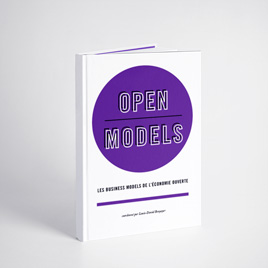
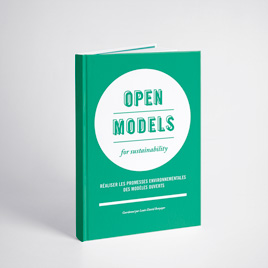

Academic research
Follonier, K., Benyayer, L.-D., & Rekik, Y. (2025). Switzerland’s individual municipalities’ suitability for the soon-to-be introduced cleaner energy production regulation allowing peer-to-peer solar electricity trading markets: Implications for sustainable development. Journal of Cleaner Production, 517, 145833. https://doi.org/10.1016/j.jclepro.2025.145833
Benyayer, LD., Bick, M. (2024). Business Models for Mobility Data Sharing Platforms: Stakeholders’ Perceptions. In: Papadaki, M., Themistocleous, M., Al Marri, K., Al Zarouni, M. (eds) Information Systems. EMCIS 2023. Lecture Notes in Business Information Processing, vol 502. Springer, Cham. https://doi.org/10.1007/978-3-031-56481-9_7
Brink, A., Benyayer, L.-D. and Kupp, M. (2024), Decision-making in organizations: should managers use AI?, Journal of Business Strategy, Vol. 45 No. 4, pp. 267-274. https://doi.org/10.1108/JBS-04-2023-0068
Benyayer, L.-D. and Kupp, M. (2017), Responding to open business models, Journal of Business Strategy, Vol. 38 No. 2, pp. 33-40. https://doi.org/10.1108/JBS-09-2016-0094
Online courses

AI is now everywhere. The technology is readily available, and one’s ability to use it to create and capture value has become paramount. Merely understanding the technology is no longer sufficient. To grow a competitive advantage, managers must go beyond the basics and develop a strategic view of AI.
This online certificate is designed to fill this need, and participants having completed the course will be able to:
- Identify how to create and capture value with AI through frameworks, examples and case studies covering the full spectrum of corporate activities
- Prepare the implementation of transformation initiatives to leverage AI in their specific contexts using methodologies, tools, and industry leaders’ experience.

Agentic AI represents a new generation of artificial intelligence capable of autonomous decision-making, goal-setting, and tool use.
This course introduces the foundations, opportunities, and implications of agentic AI systems.
You will explore what differentiates agentic AI from traditional automation and generative models, assess its strategic value and risks.

©2026 Louis-David Benyayer. All rights reserved